
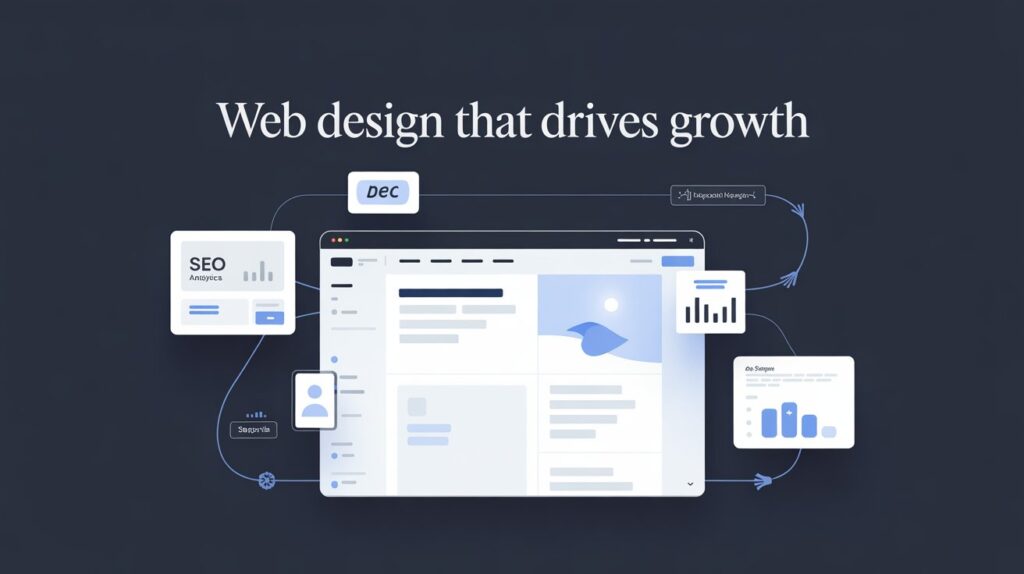
The Website Foundations That Support SEO and Lead Capture.
A clean article template around site structure, UX clarity, metadata, speed, and conversion basics.
A strong website does more than look polished. It gives search engines a clearer structure to crawl, helps visitors understand the offer faster, and removes friction from the exact actions you want them to take. A well-designed web design is the cornerstone of effective online presence, fostering user engagement and enhancing conversion rates.
Importance of Responsive Design
Implementing effective web design principles is essential for capturing leads and improving overall website performance.
With the increasing use of mobile devices, having a responsive design is crucial. A responsive website adapts to various screen sizes, ensuring a seamless experience whether users are on desktops, tablets, or smartphones. Google emphasizes mobile-friendliness in its ranking criteria, making responsive design a significant factor for SEO. Not only does it enhance usability, but it also helps in reducing bounce rates, as visitors are more likely to stay on a site that is easy to navigate on their device.
Content Strategy and SEO
Creating high-quality, relevant content is at the heart of any successful SEO strategy. Content should be tailored to address the needs and questions of your target audience. Incorporating keywords naturally within engaging articles, blog posts, and other forms of media can improve your site’s visibility on search engines. Additionally, updating content regularly signals to search engines that your site is active and relevant, which can positively impact rankings.
The Role of Analytics in Web Design
Utilizing analytics tools provides insights into user behavior, helping to refine web design and content strategy. Understanding where visitors come from, how they interact with your site, and which sections drive conversions allows for data-driven decisions. This continuous feedback loop aids in optimizing both user experience and SEO performance. Regularly monitoring key metrics such as page views, bounce rates, and conversion rates is essential for long-term success.
Integrating Social Proof
Incorporating elements of social proof, such as testimonials and case studies, can enhance credibility and trust, encouraging visitors to take action. Showcasing positive reviews prominently on your site can help mitigate hesitations and lead to higher conversion rates. Additionally, linking to your social media profiles can facilitate engagement and create a community around your brand.
A clear structure helps both people and search engines.
Good websites usually feel simple because someone took the time to make the hierarchy obvious. Core pages are easy to find, messaging is organized logically, and visitors are not forced to work out where they should go next. For instance, consider the top websites in various industries; they all share an intuitive layout that guides users effortlessly from one section to another. A clear navigation menu with distinct categories not only aids visitor comprehension but also assists search engine bots in indexing the site more efficiently.
That same clarity helps search too. When pages have strong internal structure, clean metadata, and a more deliberate content flow, it becomes easier for search systems to understand what the site is about and which pages matter most. Utilizing descriptive headings, subheadings, and bullet points can break down information into digestible bits, improving both user experience and SEO performance.
UX and performance shape whether traffic turns into action.
SEO can bring the right people in, but the experience on the page determines what happens next. Slow loading, weak hierarchy, crowded layouts, or vague calls to action make even good traffic less valuable. Studies show that users are more likely to abandon a site that takes longer than three seconds to load, underscoring the importance of optimizing images and leveraging browser caching.
The stronger sites combine visual confidence with practical usability. They answer the first questions quickly, keep navigation intuitive, and make the desired next step feel obvious instead of buried. For example, prominent placement of call-to-action buttons, strategically placed throughout the site, can significantly boost click-through rates and conversions.
Small page decisions compound across the entire site.
Better page titles, cleaner content sections, stronger mobile responsiveness, faster performance, and tighter forms may each feel minor in isolation. Together, they change how the whole site performs. Each element contributes to the overall user experience and SEO efficacy. For example, a page with a concise, keyword-rich title will likely rank higher on search results, driving more organic traffic.
That is why web design should be treated as a business system instead of a one-time visual exercise. A better foundation supports future blog content, stronger lead capture, and a cleaner path into whatever platform the site grows into next. By consistently reviewing and refining each aspect of site design and functionality, businesses can ensure they remain competitive in an ever-evolving digital landscape.
The best website foundation is not flashy. It is the invisible structure that makes ranking easier and decision-making faster. A solid web design not only attracts visitors but also retains them, converting interest into action.
The best website foundation is not flashy. It is the invisible structure that makes ranking easier and decision-making faster. A solid web design not only attracts visitors but also retains them, converting interest into action.
From My Brand Alchemy
We think the strongest websites are the ones that support brand perception, search visibility, and conversion flow at the same time. It’s essential to continuously assess and adapt your web design strategies. By keeping abreast of design trends, user behavior analytics, and SEO updates, businesses can create a website that resonates with their audience while achieving long-term success.